🌌✨ A Rare Planetary Parade Is Lighting Up the Night Sky! Don’t Miss This Once-in-a-Generation Event! 🔭🚀 | AstronomyLovers | SevenPlanets | PlanetaryParade | PlanetsAlignment | NightSky | AstronomyPhotography | PlanetaryConjunction | AstronomyNews | SpaceExploration | Space | Skywatching | SolarSystem | ScienceNews | Astronomy | CelestialEvent | Stargazing | SpaceLovers | RareAstronomicalEvent |
Planetary Parade
🌌✨ A Rare Planetary Parade Is Marching Through the Night Sky! 🔭🚀
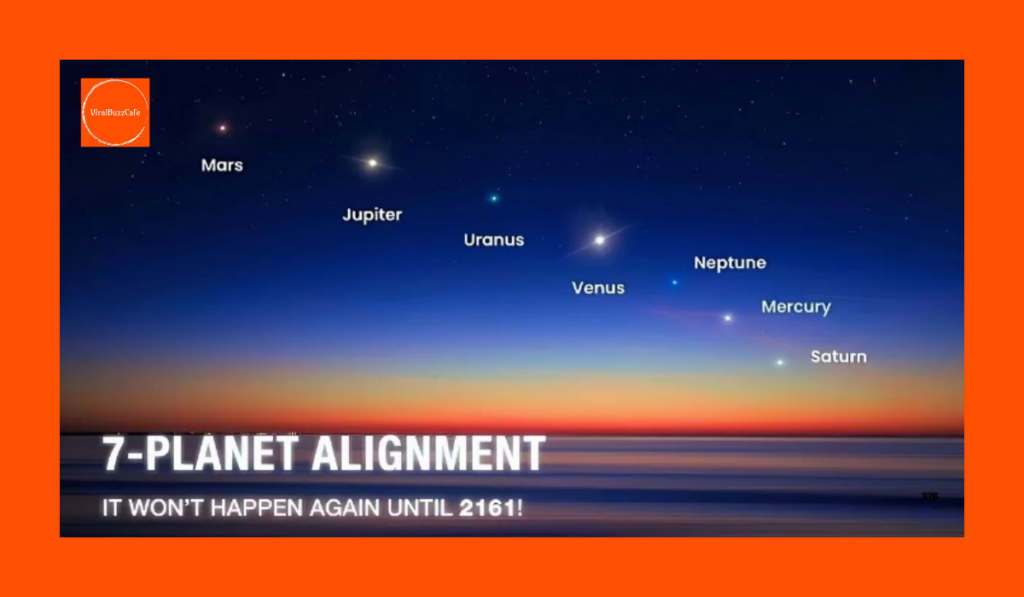
Seven planets—Mercury, Venus, Mars, Jupiter, Saturn, Uranus, and Neptune—have aligned in a breathtaking celestial event! 🌍✨ This rare phenomenon won’t happen again until 2040, making it a must-see for all space lovers. 🌠
🔹 Best viewing: Just after sunset
🔹 Visible planets: Venus, Mars, Jupiter & Saturn (naked eye) 🔭
🔹 Catch it before it’s gone!
Tag a friend who loves #Astronomy and look up tonight! 🌙💫
A Planetary Parade Is Marching Through the Night Sky
Planetary Parade: A Rare Celestial Spectacle
In an awe-inspiring celestial event that thrilled skywatchers worldwide, seven planets aligned in a rare celestial parade on February 28, 2025. This planetary alignment, a striking yet scientifically predictable occurrence, captivated astronomers and casual stargazers alike. The next comparable event is not expected until 2040, making this a moment to cherish.
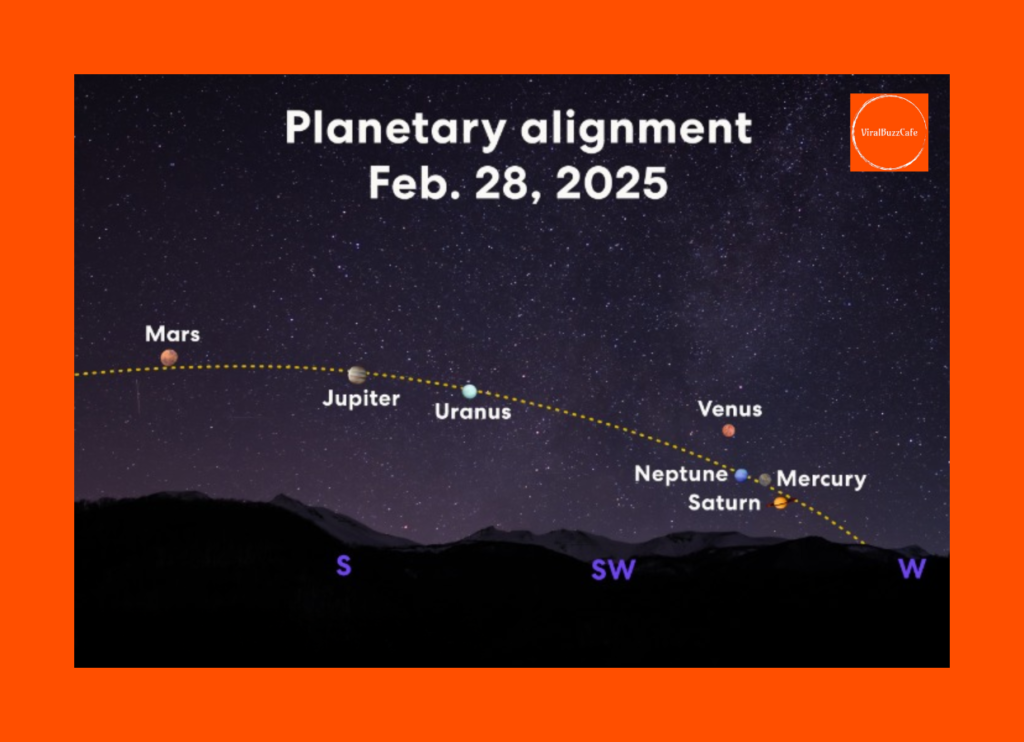
This rare alignment, often referred to as a “planetary parade,” offered a spectacular display for both amateur and professional astronomers.
The Science Behind Planetary Alignments
A planetary parade occurs when multiple planets appear in close proximity in the sky from our vantage point on Earth. This visual alignment is an optical illusion caused by the planets’ respective orbits around the Sun. Although the planets are still vast distances apart in reality, their positions create a temporary and mesmerizing alignment when observed from Earth.

Planetary Alignment in 2024
Astronomers categorize planetary alignments into three types:
- Mini Alignment: Involves three planets
- Small Alignment: Includes four planets
- Large Alignment: Features five or more planets
The February 28 event was particularly significant because it included seven planets—Mercury, Venus, Mars, Jupiter, Saturn, Uranus, and Neptune—a rare occurrence that happens only once every few decades.
The Seven Planets on Display
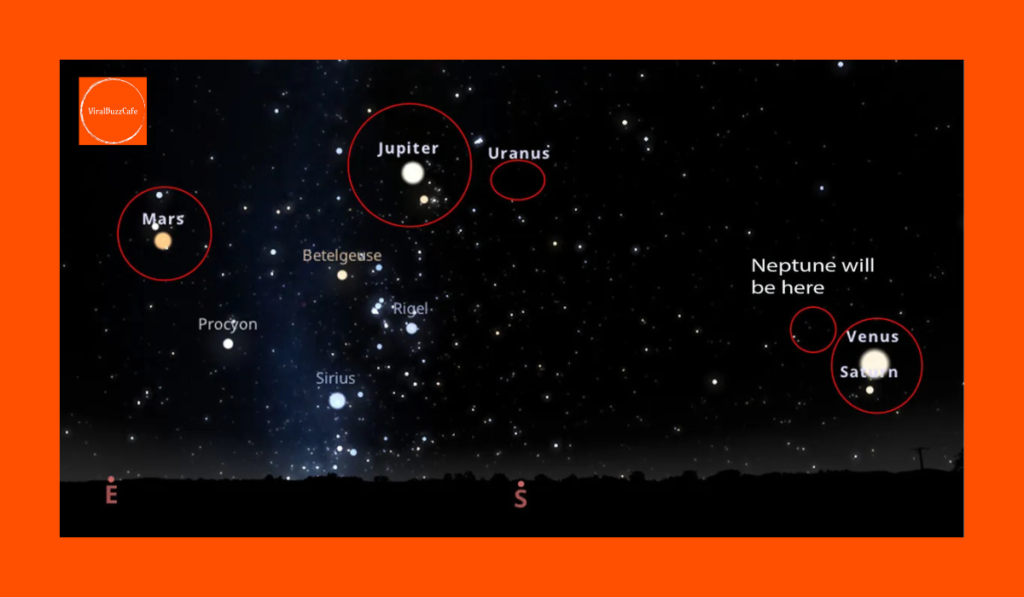
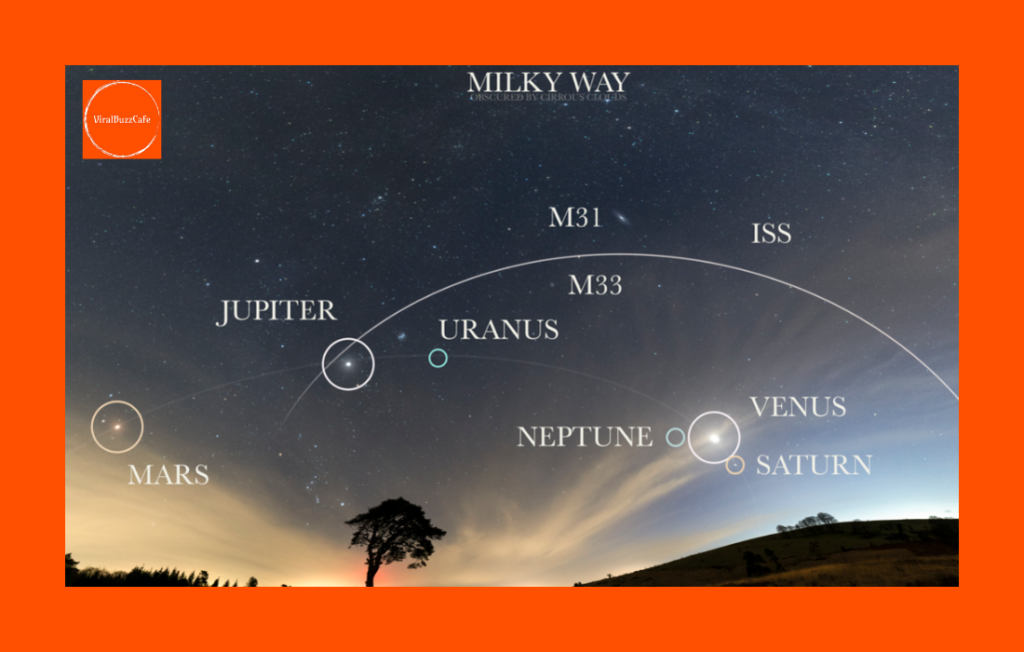
The planets that participated in this alignment were Mercury, Venus, Mars, Jupiter, Saturn, Uranus, and Neptune. Here’s a breakdown of their visibility during the event:
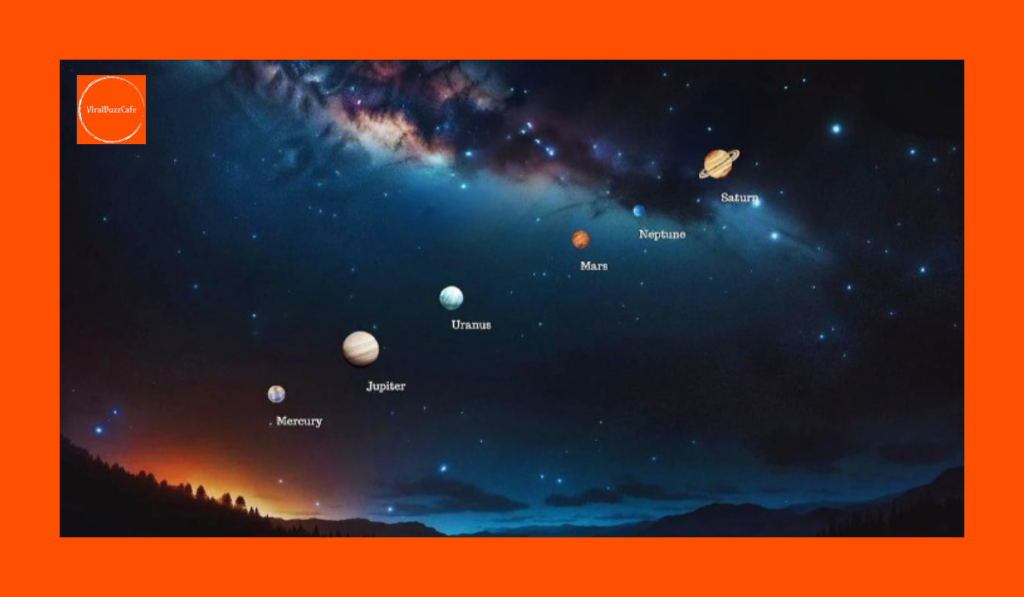
Planetary Parade – The 7 Planet Alignment
-
Venus: Often dubbed the “Evening Star,” Venus was prominently visible shortly after sunset, shining brightly in the western sky.
-
Mars: Recognizable by its reddish hue, Mars was observable higher in the sky during the early evening hours.
-
Jupiter: The largest planet in our solar system appeared as a bright, steady light in the southwestern sky.
-
Saturn: While typically visible to the naked eye, during this alignment, Saturn was closer to the horizon and required binoculars or a telescope to spot.
-
Mercury: Being the closest planet to the Sun, Mercury was challenging to observe due to its proximity to the horizon during twilight.
-
Uranus and Neptune: These distant ice giants were not visible to the naked eye but could be observed using telescopes.
To view the visual story, please visit the link below:
How to Witness Such Events
For optimal viewing, astronomers and space enthusiasts sought out areas with minimal light pollution and clear skies. The alignment occurred just after sunset, making timing crucial for those hoping to catch a glimpse of the fainter planets. The absence of a full moon also helped improve visibility, enhancing the clarity of this cosmic arrangement.
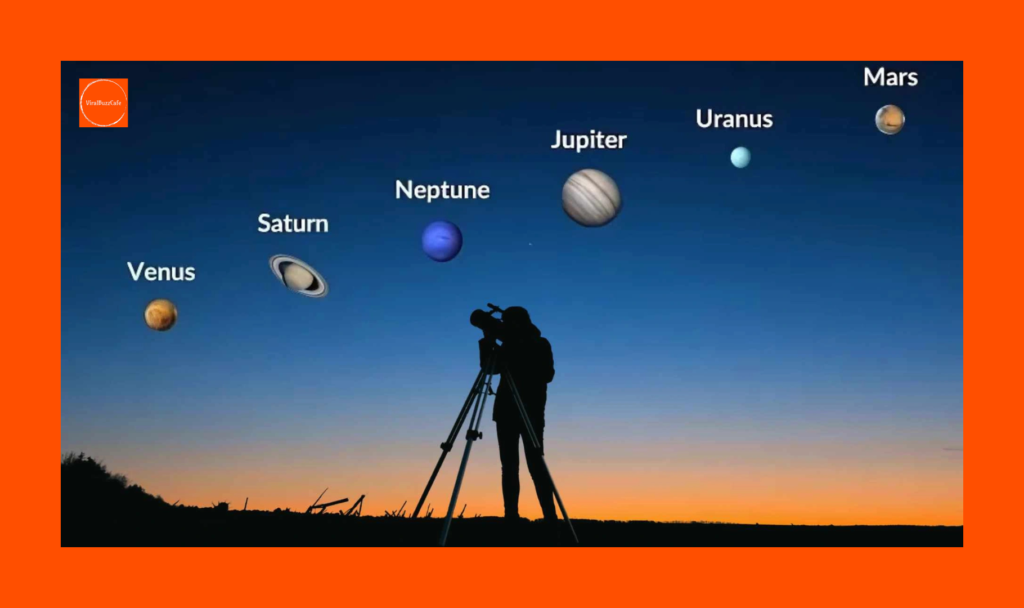
Planetary Parade
Using binoculars or telescopes allowed for a closer look at the more distant planets, while smartphone apps like SkyView and Star Walk helped pinpoint the exact locations of each celestial body.
Historical and Cultural Significance
Planetary alignments have long intrigued civilizations throughout history. In ancient cultures, such celestial events were often linked to omens, divine messages, or cosmic cycles. The Mayans, Babylonians, and Greeks meticulously recorded planetary positions, using them for agricultural and navigational purposes.
Planetary Parade
Even in modern times, planetary alignments spark curiosity and excitement, reminding us of our place in the vast universe. While science demystifies these occurrences, the wonder they inspire remains undiminished.
Future Astronomical Events
If you missed this planetary parade, don’t worry—there are plenty of upcoming celestial events to look forward to:
- April 8, 2024 – Total Solar Eclipse: A total solar eclipse will be visible across North America, one of the most anticipated events of the decade.
- December 2026 – Mars at Opposition: Mars will be at its closest point to Earth, making it appear larger and brighter.
- June 2040 – Next Large Planetary Alignment: A similar planetary parade will occur, featuring six planets in close proximity.
Final Thoughts
The planetary parade of February 28, 2025, was a breathtaking reminder of the dynamic nature of our solar system. Such celestial events bridge the gap between science and wonder, encouraging us to look upward and contemplate the vastness of the cosmos. Whether viewed through telescopes, binoculars, or the naked eye, these rare alignments continue to inspire and ignite curiosity in people of all ages.
Planetary Parade
For those who missed this event, the next opportunity to witness a similar alignment won’t occur until 2040. However, stargazers can look forward to other celestial events, such as meteor showers, lunar eclipses, and the regular appearances of the visible planets in the night sky.
As we move forward, keeping an eye on the night sky ensures we don’t miss the next moment of cosmic magic.
📢 What do you think? Drop your thoughts in the comments! 👇
Follow us on Facebook:
https://www.facebook.com/viralbuzzcafe
Follow us on Instagram:
https://www.instagram.com/vbc_admin/
Visit us on Tumblr:
https://www.tumblr.com/blog/viralbuzzcafe