Trump’s $5M ‘Gold Card’ Visa: A Game-Changer or a Hard Pass? 💰🇺🇸💳 | GoldCard | Immigration | TrumpVisa | GoldenVisa | WealthyInvestors | TrumpGoldCardVisa | Trump2025 | USGreenCard | TrumpImmigration | CitizenshipByInvestment | USInvestorVisa | ImmigrationNews | EB5Visa | InvestmentVisa | ResidencyByInvestment | USVisaPolicy | ImmigrationReform | GlobalInvestors |

Trump’s $ 5 Million Gold Card
🚨 Trump’s $5M ‘Gold Card’ Visa: A Hit or a Miss? 💰🇺🇸
President Donald Trump has proposed a $5 million ‘Gold Card’ visa aimed at attracting wealthy investors to the U.S. in exchange for residency and a fast track to citizenship. But experts aren’t convinced—citing high costs, tax burdens, and global competition from more affordable investment visa programs.
Will this plan boost the U.S. economy, or will the ultra-rich look elsewhere? 🤔💳
📢 Read more to find out why advisers say this visa may not take off!
Trump’s $5 Million ‘Gold Card’ Visa Unlikely to Attract Wealthy Investors, Advisers Say
Introduction
President Donald Trump’s recent proposal to introduce a $5 million “Gold Card” visa, intended to replace the existing EB-5 investor visa program, has been met with skepticism from immigration and wealth advisers. The initiative aims to attract affluent foreigners by offering a pathway to U.S. citizenship in exchange for a substantial investment. However, experts question its potential effectiveness, citing concerns over tax implications and the high financial threshold.

Trump’s $ 5 Million Gold Card
The ‘Gold Card’ Visa Proposal
Announced in late February 2025, the “Gold Card” visa seeks to overhaul the EB-5 program, which since 1990 has allowed foreign investors to obtain U.S. residency by investing approximately $1 million in businesses that create at least ten jobs. The new proposal significantly raises the investment requirement to $5 million, with the promise of green card privileges and a streamlined route to citizenship. President Trump envisions this initiative as a means to attract wealthy individuals who would contribute economically through job creation and tax payments. Commerce Secretary Howard Lutnick emphasized the administration’s intent to eliminate fraud associated with the EB-5 program, describing it as “full of nonsense, make-believe, and fraud.”
Investor Preferences: Why the ‘Gold Card’ May Fall Short
Wealthy investors have a multitude of options when it comes to securing residency in foreign nations. Countries such as Portugal, Canada, and the United Arab Emirates offer investment-based residency programs that require significantly lower capital commitments while providing comparable or superior benefits. The U.S. ‘Gold Card’ visa, with its steep $5 million price tag, may struggle to compete in this increasingly competitive market.
According to a senior immigration consultant, “Affluent investors are highly strategic. They weigh factors like taxation, ease of doing business, and lifestyle benefits before committing to a residency-by-investment program. The U.S. has undeniable advantages, but the cost-to-benefit ratio of this program is questionable compared to alternatives.”

Trump’s $ 5 Million Gold Card
Competing Golden Visa Programs
Several nations offer attractive alternatives to Trump’s proposed initiative:
- Portugal’s Golden Visa: With an investment requirement as low as €280,000 in real estate or funds, Portugal offers residency with an eventual pathway to citizenship while allowing applicants to spend minimal time in the country. Additionally, it provides tax exemptions for up to ten years.
- Canada’s Start-Up Visa: While not a direct investment program, Canada provides a residency route for entrepreneurs and investors who commit to starting businesses. Unlike the U.S., Canada does not impose worldwide taxation on its residents.
- UAE’s Golden Visa: With an investment as low as AED 2 million (approximately $545,000), investors can secure a 10-year residency permit without income tax obligations.
Given these alternatives, the “Gold Card” visa may not be the first choice for ultra-high-net-worth individuals looking for a residency-by-investment option.
The Political Angle: Trump’s Broader Immigration Strategy
Trump’s advocacy for the “Gold Card” visa aligns with his broader immigration strategy—favoring merit-based and investment-driven entry into the U.S. over traditional family reunification pathways. While his administration previously attempted to curtail certain visa programs, this new proposal signals an effort to leverage the country’s appeal to the ultra-wealthy as a financial instrument.
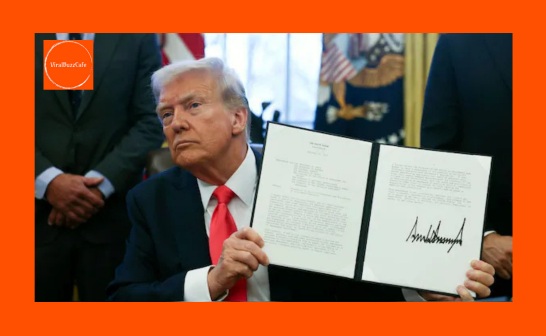
Donald Trump
Despite this strategic pivot, critics argue that such policies prioritize wealth over contribution. Immigration reform advocate John Sanderson commented, “This initiative benefits only a narrow elite while ignoring the skilled workers, entrepreneurs, and middle-class investors who have long fueled the American economy.”
Trump’s supporters, however, argue that this visa could be a revenue-generating mechanism that reduces dependency on taxpayers. “Why not charge for citizenship when so many are willing to pay?” an administration official remarked. “The U.S. is the most sought-after place to live, and this is a way to monetize that demand.”
To view the visual story, please visit the link below:
Will the ‘Gold Card’ Visa Ever Materialize?
As with many ambitious policy proposals, the success of the “Gold Card” visa hinges on execution. While Trump claims the program could be implemented unilaterally without Congress, legal experts disagree. Given the EB-5 program’s legislative origins, any attempt to overhaul it significantly could require congressional approval—a daunting prospect in a politically divided landscape.
Trump’s $ 5 Million Gold Card
Even if it were implemented, questions remain about enforcement, eligibility, and how funds would be utilized. Would the investment need to be made in specific industries or locations? Would there be safeguards to prevent fraudulent schemes similar to those that plagued the EB-5 program?
An economist from the Brookings Institution noted, “Theoretically, this could be a profitable policy, but only if properly structured. Without strict guidelines, it risks becoming an overpriced visa with little economic impact.”
Expert Skepticism
Despite the administration’s optimistic projections, advisers specializing in immigration and wealth management express doubts about the “Gold Card” visa’s appeal to its target demographic. One primary concern is the potential tax liability for new residents. Obtaining U.S. residency subjects individuals to taxation on their global income, a significant deterrent for many high-net-worth individuals. As one adviser noted, “The U.S. tax system’s worldwide taxation approach is a substantial consideration for wealthy clients contemplating residency.”
Additionally, the elevated $5 million investment threshold may be prohibitive. The existing EB-5 program, with its lower financial requirement, has already seen limited participation, primarily from investors in China and Hong Kong. Raising the bar further could reduce interest, especially when alternative investment-based residency programs in other countries offer more favorable terms. An immigration consultant remarked, “With numerous countries providing competitive residency options at lower investment levels, the U.S. ‘Gold Card’ may struggle to attract applicants.”
Legislative Hurdles and International Context
The “Gold Card” proposal also faces potential legislative challenges. While President Trump suggested that the program could be implemented without congressional approval, the existing EB-5 program was established by Congress, and significant changes typically require legislative action. The administration has indicated that detailed plans will be released in the coming weeks, but the path to implementation remains uncertain.

Trump’s $ 5 Million Gold Card
Internationally, similar investor visa programs have come under increased scrutiny. The European Union has pressured member states to tighten residency-by-investment schemes due to concerns over minimal economic benefits, tax evasion risks, and potential property market disruptions. This global trend toward stricter regulations may influence the attractiveness of the U.S. program. A policy analyst observed, “As nations reevaluate the efficacy and ethics of ‘golden visas,’ the U.S. must consider these dynamics when designing its own programs.”
Potential Economic Impact
The administration posits that the “Gold Card” visa could serve as a tool for reducing the national deficit. President Trump suggested that selling up to one million of these visas could generate substantial revenue. However, experts caution that such projections may be overly ambitious. Given the concerns about tax liabilities and the high investment threshold, the actual uptake of the program could fall short of expectations, limiting its fiscal impact. An economist commented, “Relying on the ‘Gold Card’ visa as a significant revenue source may not be prudent without clear indicators of investor interest.”
Conclusion: A Visa for the Ultra-Elite, but at What Cost?
Trump’s “Gold Card” visa embodies a bold vision—one that seeks to transform U.S. immigration into a high-priced transaction. However, for many wealthy investors, the high cost, potential tax burdens, and global competition make it an unappealing proposition.

Donald trump
Whether this visa becomes a reality or remains a political talking point will depend on legal feasibility, market demand, and the broader immigration debate. For now, experts remain unconvinced that the world’s richest will line up for America’s most expensive residency card.
While the “Gold Card” visa proposal aims to attract wealthy investors to the United States, its success is uncertain. Tax implications, a substantial financial requirement, legislative uncertainties, and global trends toward stricter investment visa regulations all pose challenges to the initiative’s viability. As the administration prepares to release further details, it will need to address these concerns to enhance the program’s appeal to potential investors.
📢 What do you think? Drop your thoughts in the comments! 👇
Follow us on Facebook:
https://www.facebook.com/viralbuzzcafe
Follow us on Instagram:
https://www.instagram.com/vbc_admin/
Visit us on Tumblr: