Why America Left Paris Agreement: The Untold Climate Story 🌍 | ParisAgreement | GreenFuture | ClimateAction | Sustainability | GlobalLeadership | CarbonNeutral | EnvironmentMatters | NetZero | RenewableEnergy | ClimateCrisis | EcoFriendly | ClimateResilience |
America’s Paris Withdrawal: A Different Story
When the United States announced its withdrawal from the Paris Agreement in 2017, the decision sent shockwaves across the globe. Heralded as a landmark accord to combat climate change, the Paris Agreement symbolized international unity against a common existential threat. America’s retreat was not merely the act of one nation stepping back; it represented a fissure in the global fight against climate change and raised questions about the United States’ commitment to multilateral cooperation. However, the narrative surrounding this withdrawal is not as one-dimensional as it may initially appear.

The Context Behind the Exit
The Paris Agreement, adopted in 2015, seeks to limit global warming to well below 2°C above pre-industrial levels, with efforts to cap it at 1.5°C. Each country sets its own nationally determined contributions (NDCs) to meet these goals, ensuring flexibility while fostering accountability. For many, the U.S. withdrawal was perceived as a betrayal of this collective commitment.
But the decision was deeply rooted in domestic politics. The Trump administration, citing economic concerns, argued that the agreement imposed unfair burdens on the U.S. while allowing developing nations to grow with fewer restrictions. This perspective resonated with parts of the American electorate that viewed global agreements as threats to national sovereignty and economic interests.
Critics of the Paris Agreement within the U.S. emphasized its perceived asymmetry. Countries like China and India, both significant carbon emitters, were given more leeway due to their developing-nation status. The Trump administration’s argument was simple yet potent: Why should America bear a disproportionate share of the burden when others were not doing enough?
The Fallout of Withdrawal
The global reaction was swift and largely critical. Allies lamented the decision, while climate activists denounced it as a setback for the planet. Critics feared that America’s exit could encourage other nations to follow suit, unraveling the fragile consensus that the Paris Agreement represented.
Domestically, the withdrawal ignited fierce debates. Environmentalists warned that retreating from the accord would cede America’s leadership on climate issues to countries like China and the European Union. Businesses were divided. While fossil fuel industries supported the decision, many corporations, including tech giants and renewable energy firms, opposed it. They viewed sustainability as not just an ethical imperative but also an economic opportunity.
The Counter-Narrative: States, Cities, and Corporations
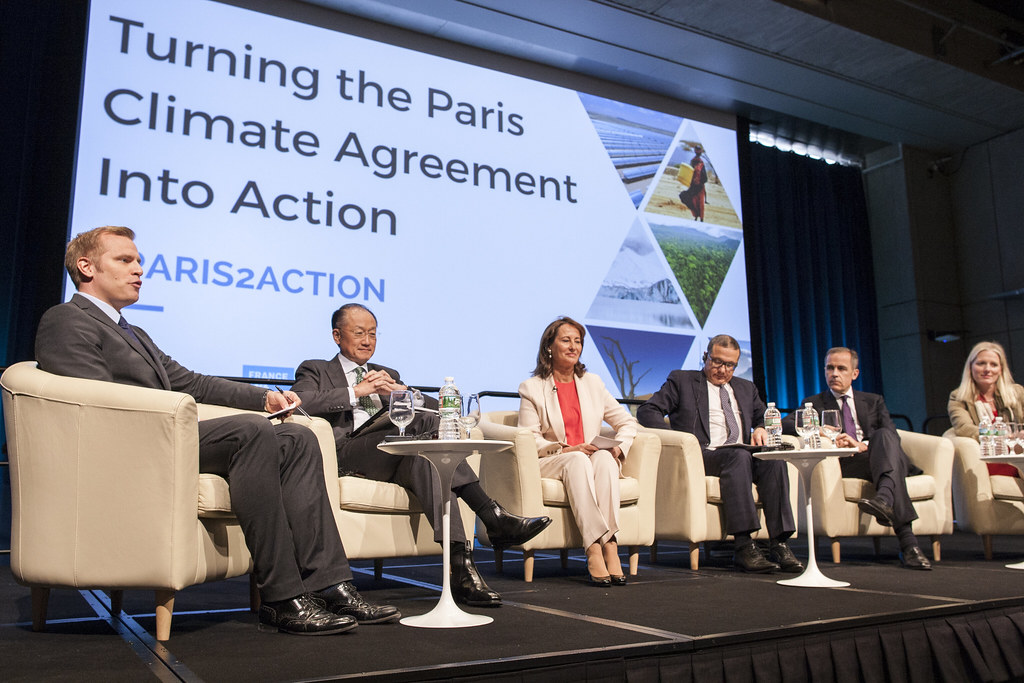
While the federal government stepped back, a parallel story unfolded across America. States, cities, and corporations rallied to uphold the spirit of the Paris Agreement. Initiatives like the U.S. Climate Alliance—a coalition of states committed to achieving the goals of the Paris Agreement—illustrated a decentralized response to climate change.
Major cities such as New York, Los Angeles, and Chicago implemented robust climate action plans. These efforts underscored a growing recognition that combating climate change is as much a local responsibility as it is a global one. In many ways, these subnational actors filled the void left by the federal government, demonstrating that America’s environmental commitment was far from extinguished.
Corporations, too, stepped up. Many large companies pledged to reduce emissions, adopt renewable energy, and invest in sustainable technologies. For these businesses, addressing climate change was not just about public relations; it was about staying competitive in a world increasingly prioritizing sustainability.
Global Implications: A Lesson in Resilience
The U.S. withdrawal inadvertently highlighted the resilience of the Paris Agreement. Instead of collapsing, the agreement endured, bolstered by the commitments of other nations and non-state actors. In fact, some argue that America’s exit galvanized greater resolve among other signatories, who redoubled their efforts to meet their climate goals.
Moreover, the narrative of America’s withdrawal underscores an important lesson: the fight against climate change is no longer confined to national governments. It is a multi-layered effort involving states, cities, corporations, and individuals. The decentralized response in the U.S. set a powerful precedent, proving that climate action can persist even in the absence of federal leadership.
A New Chapter: Rejoining the Paris Agreement
In 2021, the Biden administration formally rejoined the Paris Agreement, signaling a renewed commitment to global climate leadership. The move was widely celebrated, but the scars of the withdrawal linger. Trust, once fractured, takes time to rebuild.
America’s return also came with heightened expectations. Having stepped away once, the U.S. faced increased scrutiny to demonstrate that its commitment was genuine and lasting. The Biden administration’s ambitious climate agenda, which includes transitioning to a carbon-neutral economy by 2050, seeks to address these concerns. Yet, questions remain about the durability of America’s climate policies in the face of potential future political shifts.
Conclusion
America’s withdrawal from the Paris Agreement was a pivotal moment in the global climate narrative, but it is far from the whole story. The episode underscored the complexities of balancing domestic interests with global responsibilities. It also highlighted the resilience of the international community and the growing importance of decentralized climate action.
In hindsight, the withdrawal serves as a reminder that the path to addressing climate change is rarely linear. Progress is often messy, shaped by conflicting interests and evolving dynamics. But if there is one takeaway, it is this: the fight against climate change is bigger than any one nation, administration, or agreement. It is a shared endeavor, driven by a collective will to secure a sustainable future.
To view the visual story, please visit the link below:
Follow us on Facebook:
https://www.facebook.com/viralbuzzcafe
Follow us on Instagram:
https://www.instagram.com/vbc_admin/
Visit us on Tumblr:
https://www.tumblr.com/blog/viralbuzzcafe
Visit us on Pinterest:
https://www.pinterest.com/viralbuzzcafe